Sprout Farming in Kalobeyei: Growing Food and Hope in Kenya
By Light Academy Editorial Team
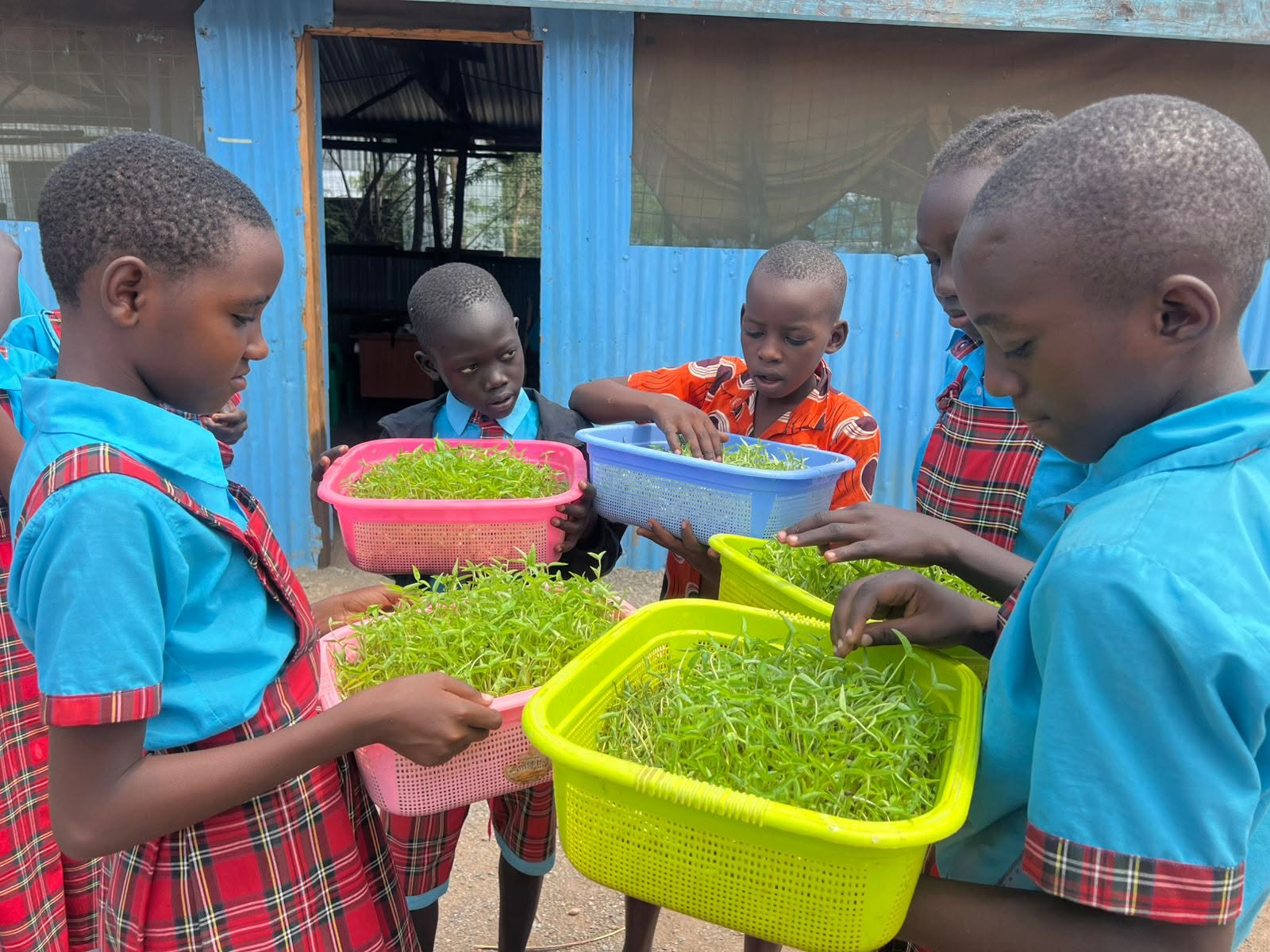
In the heart of Kalobeyei Settlement, where food insecurity is a daily reality for many refugee families, a quiet agricultural revolution is taking root. Light Academy has launched an innovative sprout farming project that is transforming how students and their families access nutritious food.
What started as a small classroom experiment has blossomed into a sustainable food production initiative that is now feeding over 200 students and their families with fresh, nutrient-rich sprouts. This project is more than just agriculture — it's a powerful lesson in self-reliance, sustainability, and hope.
The Challenge: Food Insecurity in Refugee Communities
Food insecurity is one of the most pressing challenges facing refugee communities in Kalobeyei and Kakuma. Families often rely on limited food rations, and access to fresh vegetables is scarce. This nutritional gap has a direct impact on children's health, concentration, and academic performance.
"Before the sprout project, many of our students came to school hungry. They struggled to focus in class, and their health was suffering. We knew we had to find a sustainable solution that our students could participate in and benefit from."
The Solution: Sustainable Sprout Farming
Sprout farming is a simple, low-cost, and highly efficient method of growing nutrient-dense food in a small space. With minimal water, no soil, and a short growing cycle (5-7 days), sprouts are an ideal solution for refugee settings where space and resources are limited.
Students at Light Academy learned how to grow a variety of sprouts, including mung beans, lentils, and chickpeas. The process is simple enough for young learners but teaches valuable skills in agriculture, nutrition, and entrepreneurship.
Benefits of Sprout Farming
- 🌱 Nutrient-rich: Sprouts contain up to 30% more nutrients than mature vegetables
- 🌱 Fast-growing: Ready to harvest in just 5-7 days
- 🌱 Low-cost: Requires minimal seeds, water, and equipment
- 🌱 Space-efficient: Can be grown in small containers, ideal for refugee settings
- 🌱 Year-round: Can be grown indoors regardless of weather conditions
The Sprout Growing and Learning Process
The sprout farming project is integrated into Light Academy's Competency-Based Curriculum (CBC), combining practical skills with academic learning. Students learn about biology, nutrition, mathematics (measuring and counting), and entrepreneurship through the project.
Step-by-Step Sprout Farming:
- Seed Selection: Students choose high-quality seeds and learn to identify viable seeds
- Soaking: Seeds are soaked in water for 8-12 hours to begin the germination process
- Rinsing and Draining: Students rinse the seeds 2-3 times daily to prevent mold
- Harvesting: Sprouts are ready to harvest after 5-7 days
- Distribution: Sprouts are shared with the school community and families
Project Impact and Nutritional Results
Since the launch of the sprout farming project, Light Academy has witnessed remarkable improvements in student health, nutrition, and engagement.
Students & families fed weekly
Days seed to harvest
Increased nutrients
Student participation
Voices from the Kalobeyei Community
Eunice Mwangi
Grade 7 Student
"I love the sprout farming project! I've learned how to grow my own food at home, and my family now has fresh vegetables every week. I want to become a farmer when I grow up."
Peter Kiprop
Parent
"My daughter taught me how to grow sprouts at home. It's made such a difference in our family's nutrition. We're grateful to Light Academy for teaching our children practical skills."
Future Plans for Agricultural Education
Light Academy plans to expand the sprout farming project in several ways:
- School Gardens: Establishing larger outdoor gardens for vegetable production
- Student Enterprise: Creating a student-run business to sell sprouts and vegetables to the community
- Training Programs: Offering sprout farming training to parents and community members
- Research Partnerships: Collaborating with agricultural organizations to improve methods
- Nutrition Education: Expanding nutrition education programs for students and families
Growing Hope for the Future
The sprout farming project at Light Academy demonstrates the power of practical, student-centered education. By teaching students to grow their own food, the school is not only addressing immediate food security needs but also building long-term resilience and self-reliance.
Support Our Sprout Farming Initiative
You can support Light Academy's sprout farming project by donating supplies, funding training programs, or partnering with us to expand this initiative. Every contribution helps us grow more food and hope for our community.
Support Our Work