Language Barrier
New arrivals find it hard to cope with our national languages, i.e. English and Kiswahili.
Kakuma Refugee Camp, Turkana County, Kenya - hosting over 200,000 refugees and asylum seekers.
Kalobeyei Refugee Camp, located in Turkana County, Kenya, hosts more than 200,000 refugees and asylum seekers from South Sudan, Somalia, Sudan, DRC, Burundi, Ethiopia, and neighboring countries. The camp's growing population includes an overwhelming ratio of children, creating an urgent demand for formal educational services.
Education remains a critical, life-saving priority within the community. Currently, the camp infrastructure relies on 13 pre-schools, 21 primary, and 5 secondary schools. However, only 56% of pre-primary, 92% of primary, and a critical 6% of secondary-eligible children are enrolled - leaving massive gaps while 55% of the total camp population consists of school-aged learners.
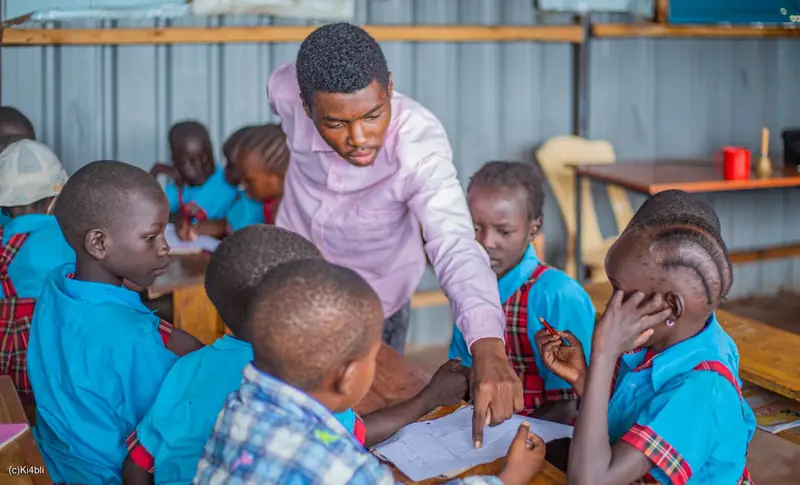
Kalobeyei Refugee Camp, Turkana County, Kenya
New arrivals find it hard to cope with our national languages, i.e. English and Kiswahili.
Extreme heat disrupts learning, making it difficult to deliver lessons effectively and retain qualified teachers.
Parents lack financial and economic empowerment. Without viable youth development opportunities, idle teenagers often fall into early pregnancies, drug addiction, or alcoholism.
Light Academy School began in 2021 with a vision to strengthen children through social emotional learning (SEL). At first, the sessions were held in a church in Kalobeyei Village Three, focusing on kids. These evening gatherings helped children build resilience, emotional strength, and hope during difficult times. Later, the three facilitators received feedback from parents, who encouraged them to run the program daily for children, not just in the evenings.
The school was supported by Lutheran World Federation (LWF) with a structure which later one was swept away by wind, leaving them under a tree. Afterward, they were assessed by an organization called COHERE which funded the construction of a new class.
Despite these challenges, Light Academy School remained a symbol of resilience and hope. From one church to a classroom, and even under the shade of trees, the school proved that education is not defined by buildings but by the determination of teachers, learners, and the community.
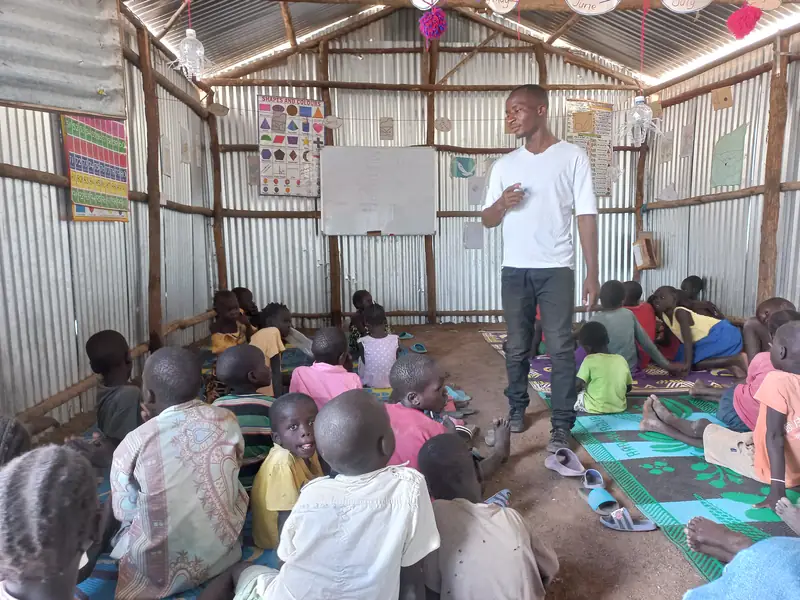
To sustain a modern school infrastructure that delivers holistic quality education moving away from standard grade-based assessment toward an ability-based developmental approach that prepares refugee youth for a truly sustainable and self-reliant future.